


We reconstructed the house, installed stretch ceilings and now enjoy the cleanliness of the house. After some time, we start thinking about keeping the ceiling clean. Usually, the outer part of stretch ceilings is covered with antistatic material, due to which, the stretch ceilings don't absorb dust. But, in different parts of the house the pollution level is different, and anyway, there are questions; how to clean stretch ceilings, can you clean stretch ceilings or you need special cleaning liquids and materials.
The methods of cleaning stretch ceilings
So, it is allowed to clean stretch ceilings in these ways:
· Dry cleaning: this method of cleaning is done by a vacuum cleaner or piled fabric. You have to know that in this case, you don't need a broom.
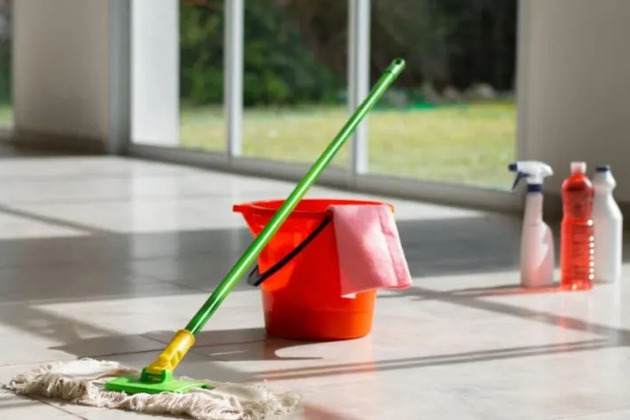
· Wet cleaning: with wet sponge or flannel fabric. If there is a layer of grease on the ceiling then you can add cleaning liquids to water: liquid soap, dishwashing liquid, polirol or a liquid made for cleaning stretch ceilings.
The method of cleaning depends on ceiling's level of pollution, also on the type of the ceiling.
· PVC or matte fabric ceilings need dry vacuum cleaning
· Gloss ceiling are cleaned with dry napkins and with ammonium chloride liquid or sparse liquid soap. It is not allowed to use kerosene, solvents or any liquid containing acetone.
The cleaning techniques of different rooms
Depending on the conditions of using the rooms the level of pollution is different, which is the key factor when choosing the method of cleaning.
The ceilings of the living room and the bedroom usually don't get polluted that much. Just time to time, you'll have to clean the dust and cobwebs. In this case dry cleaning with vacuum cleaner, dry fabric or soft brush is the best choice.
The ceilings of the kitchen are the ones to get very dirty and you can't avoid grease layer. The stretch ceilings of the kitchen are suggested to clean with water; adding any cleaning liquid to it (liquid soap or dishwashing liquid).
Helpful advices when cleaning stretch ceilings
· When cleaning with vacuum cleaner you have to be carefully choose the vacuum brush. It has to be soft, so that it doesn't scratch the ceiling.
· The stretch ceilings made of fabric have to be cleaned with soft brushes.
· When cleaning with wet method you have to choose a fabric that won't leave hair on the surface.
· When cleaning with wet method it is not allowed to use kerosene, solvents or acetone.
· Scratches on matte ceilings can be cleaned even with a rubber.
· When cleaning PVC ceilings with a photoprint it is not allowed to use alcohol liquids, because the paint can be removed.