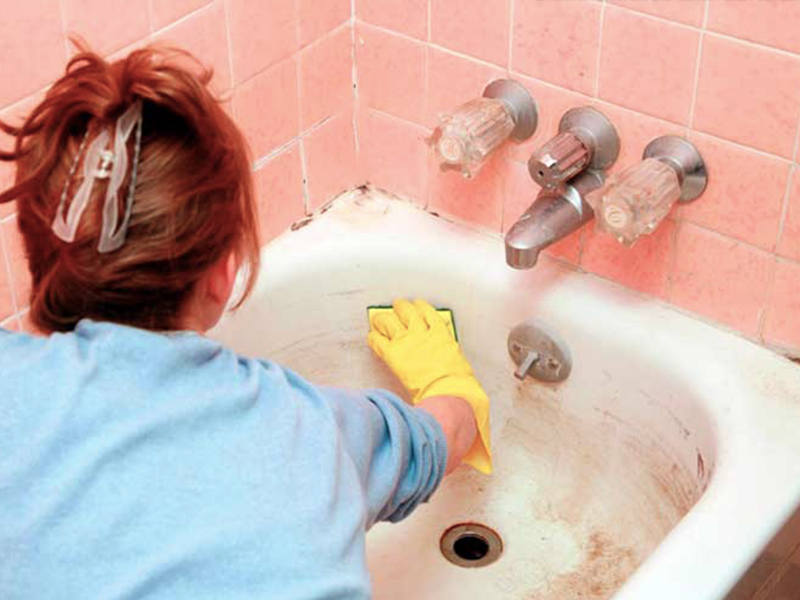
Rust spoils not only the appearance of the bathroom but can also lead to the destruction of coatings.
The causes of rust
Rust is the most difficult type of plaque to remove, and it forms as a result of poor tap water quality. Additionally, corrosion may occur.
due to wear and tear of plumbing items;
inadequate hygiene
composition of the enamel.
The most effective methods for removing rust from plumbing
Cleaning plumbing from traces of rust is a laborious process.
An effective rust cleaning method is hydrochloric acid solution. To do this, use rubber gloves and a respirator. Apply the product for 10-15 minutes, then rinse with running water.
Oxalic acid method , please use the .
Ammonia and peroxide also clean rust quite well (in a ratio of 1:2), sponge applied to the surface. After 15 minutes, rinse with warm water.
Lemon juice will soften the plaque, after which the rust can be removed with baking soda.
Features of toilet and sink cleaning
Rust removal can be done:
various types of acids: citric, oxalic, acetic. They should be sprayed and then rinsed with water after 2–3 hours.
Rust can also be removed effectively with a vinegar and baking soda solution (leave overnight).
ammonia and hydrogen peroxide. Usage is described in the previous paragraph.
Electrolyte can be used to remove rust from the toilet bowl. However, this tool is not suitable for use if you have plastic pipes.
Toothpaste is a popular rust remover. Spread it on a rusty surface and leave it for a while.
Features of cleaning the drain tank
Cleaning the drain tank involves the use of various pasty products and abrasive powders. The stores offer a large selection of specialized products, among which are Sanoks, Pemolux, Silit Bang, etc. From folk remedies, you can use:
Ammonia combined with hydrogen peroxide.
Laundry detergent
Whitening toothpaste.
The features of cleaning metal hoses and mixers
The most popular rust remover is ammonia. To do this, mix part of ammonia with hydrogen peroxide (in a ratio of 1: 2) and apply the product on a rusty surface. Leave it on for 20 minutes and rinse with water. Another effective way to get rid of rust is to use 7% or 9% table vinegar or citric acid. Apply this solution for 2-3 hours, or in the case of severe pollution, at night, and then rinse with cool water.
Rust Prevention
The best fight against rust is prevention.
Regular cleaning of plumbing. Once a week, clean with baking soda, laundry soap, etc.
Elimination of all leaks, because it is water that causes rust spots.
The use of special protective agents that create a protective film on the surface.
Good ventilation and good ventilation.